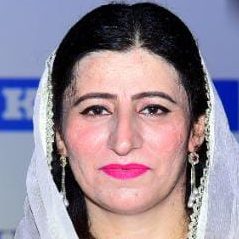
Personal Details
Currently, I serve as Professor and Director at the Kashmir Institute of Economics, the University of Azad Jammu and Kashmir (UAJK). I teach a range of courses to both undergraduate and graduate students, including Advanced Econometrics, Advanced Macroeconomics, Environmental Economics, and Sustainable Development. Over the past twelve years, I have been actively engaged in the fields of finance, governance, economic growth, and sustainable development. My academic and research work has involved both theoretical and empirical analyses of growth models for developing and developed countries. I have also conducted extensive research on environmental and climate change, governance, and their impacts on economic productivity.
Area of Specialisation:
Finance, governance, economic growth and sustainable development
Education:
PhD Economics, Pakistan Institute of Development Economics (PIDE), Islamabad.
Area of Specialisation:
Finance, governance, economic growth and sustainable development
Education:
PhD Economics, Pakistan Institute of Development Economics (PIDE), Islamabad.
PhD
Kashmir Institute of Economics
- Sabir, S. (2024). “The Potential of Tourism in Azad Jammu and Kashmir within the Context of CPEC, presenting an Overview of Opportunities for Growth and Development” published in a book titled “China-Pakistan Economic Corridor: A Decade of Transformation across Pakistan Regional Impacts and Progress by The Centre for BRI and China Studies at the Institute of Peace and Diplomatic Studies (IPDS) in Islamabad in collaboration with the Pakistan Research Center at Inner Mongolia Honder College of Arts and Sciences, China.
- Asif, K., Sabir, S., Qayyum, U. (2024). Corruption, Political Instability, and Environmental Degradation in South Asia: A Comparative Analysis of Carbon Footprint and Ecological Footprint. Journal of the Knowledge Economy, 15, 4072-4096. (IF 4.0).
- Kiani, T.A., Sabir, S., Qayyum, U., Anjum, S. (2023). Estimating the effect of technological innovations on environmental degradation: empirical evidence from selected ASEAN and SAARC countries. Environment, Development and Sustainability. https://doi.org/10.1007/s10668-022-02315-5.
- Zahra, S., Sabir, S. Imtiaz, A. (2022). Temperature and economic growth nexus in SAARC AND ASEAN countries. Empirical Economic Review, 5(1), 44-72.
- Iqbal, I., Sabir, S., Rasul, F. (2022). Nexus between Export Instability, Exchange Rate Volatility and Economic Growth in Developing Countries. Journal of Finance and Accounting Research, 4(1), 20-40.
- Sabir, S. Asghar, N., Rasul, F. (2021). Financial Development, Human Capital Development and Income Inequality: Evidence from Developing Countries, Statistics, Computing and Interdisciplinary Research, 3(2), 169-188.
- Sabir, S. (2021). Impact of Karot Hydro Power Project on Pakistan Economy, Strategic Studies, 41(3), 66-79.
- Sabir, S., Suleria, S. (2021). Nexus between Human Capital, Technology and Economic Growth: The Role of Stages of Economic Development in Asian Countries, Journal of Independent Studies and Research-Management, Social Sciences and Economics, 19(2), 168-192.
- Nasim, S., Shamshir, M., Sabir, S. (2021). HR Practices and Organisational Performance: What Role Does Employee Satisfaction Play? International Review of Management and Business Research, 10(1), 375-386.
- Qayyum, U., Sohail, A., Sabir, S. (2021). Armed Conflicts, Militarization, and Ecological footprint: Empirical Evidence from South Asia. The Journal of Cleaner Production. 281, 125299 (IF=9.7).
- Qayyum, U., Sabir, S., Sohail Anjum, S. (2021). Urbanization, informal economy, and ecological footprint quality in South Asia, Environmental Science and Pollution Research, 28(47), 67011-67021.
- Majeed, M. T., Maria Mazhar, M., Sabir, S. (2021). Environmental quality and output volatility: the case of South Asian economies, Environmental Science and Pollution Research, 28(24), 31276-31288.
- Ain, N. U., Sabir, S., Asghar, N. (2020). Financial Inclusion and Economic Growth: Empirical Evidence from Selected Developing Economies. Review of Economics and Development Studies 6 (1), 179-203.
- Sabir, S., Shamshair, M., & Qureshi, S. (2020). Absorptive capacity and foreign direct investment: evidence from South Asian Countries, New Horizon, 14(2), 1992-4399.
- Sabir, S., Shamshair, M. (2020). Impact of economic and social infrastructure on the long-run economic growth of Pakistan. Sustainable Water Resources Management, 6(1), 10.
- Meo, M. S., Sabir, S., Chaudhry, I. S., Batool, S., Farooq, F. (2020). Addressing the challenges of the COVID‐19 pandemic outbreak: Pakistan's preparations and response. The Journal of Public Affairs, 21(4). DOI: 10.1002/pa.2430.
- Khan, K., Sabir, S., Ibrahim, F. Z. (2020). Human capital and inclusive growth in the selected developing countries. New Horizons, 14 (1), 1992-4399.
- Sabir, S., Qayyum, U., Majeed, T. (2020). FDI and environmental degradation: the role of political institutions in South Asian countries. Environmental Science and Pollution Research, 27, 32544–32553.
- Qayyum, U., Sohail, A., Sabir, S. (2020). Religion and Economic Development: New Insights. Empirica, 47(4), 793 – 834. (IF=1.9).
- Sabir, S., Rafiq, S., Abbas, K. (2019). Institutional quality and FDI: Evidence from the developed and developing countries, Financial Innovation, 5, 1-20. (IF=6.9).
- Sabir, S., Gorus, M. S. (2019). The impact of globalisation on ecological footprint: empirical evidence from the South Asian countries, Environmental Science and Pollution Research, 26(32), 33387-33398. (IF=3.056).
- Zahid, K., Ali, G., Sabir, S., Fayaz, M. (2019). Relationship between climate change and year-to-year variability in crop yield: Selected districts of Pakistan, Sarhad Journal of Agriculture, Vol. 35, No. 1, pp. 36-42.
- Sabir, S., Qamar, M. (2019). Fiscal policy, institutions, and inclusive growth: evidence from the developing Asian countries, International Journal of Social Economics, 46(6), pp. 822-837.
- Chaudhary, I. Sabir, S., Gulzar, F. (2019). Technology and Economic Growth: Role of Financial Development in South Asian Countries, Review of Economics and Development Studies, 5(2), 323-331.
- Sabir, S., Latif, R., Qayyum, U., Abass, K. (2019). Financial Development, Technology, and Economic Development: The Role of Institutions In Developing Countries. Annals of Financial Economics (AFE), 14(03), 1-25.
- Rehman, N. A., Shamshir, M., Hussain, A., Sabir, S. (2019). Relationship between major macroeconomic variables and economic growth: A case of Pakistan during 1976-2016. WALIA journal. 35(1): 21-26.
- Abass, K., Gillani, B., Sabir, S., Altaf, M., Shehzad, F. (2019). Analysis of Frechet Distribution Based on Type-I Censored Data, Technical Journal, 24(1), 98-104.
- Shamshir, M., Sabir, S., Khan, R. (2019). Impact of macroeconomic stability and terrorism on foreign direct investment in Pakistan. New Horizons, 13(2), 223-240.
- Shamshir, M., Rehman, A. N., Hussain, A., Sabir, S. (2019). Relationship among Economic Growth and other Macroeconomic Variables: A Study of Pakistan. Journal of Resources Development and Management, 54, 60-68.
- Sabir, S., Aziz, N. (2018). Impact of Health and Education on Income Inequality: Evidence from Selected Developing Countries, Business and Economic Review, Vol. 10, No. 4, pp. 83-102.
- Sabir, S., Qayyum, A. (2018). Competition in the Banking Sector of Pakistan: Evidence from Unscaled and Scaled Revenue Equations, Journal of Economic Cooperation and Development, 38(1), 19-38.
- Sabir, S. (2018). Economic Infrastructure and Long-Run Economic Growth in Pakistan: A New Insight, Journal of Economics and Sustainable Development, 9(7), 129-142.
- Sabir, S., Khan, A. (2018). Impact of Political Stability and Human Capital on Foreign Direct Investment in East Asia & Pacific and South Asian Countries, Asian Journal of Economic Modelling, Vol. 6(3), pp. 245-256.
- Sabir, S., Qayyum, A. (2018). Privatization and profit efficiency: Evidence from commercial banks of Pakistan, Journal of Asian Business Strategy, 8(1), 1-14.
- Sabir, S. Zahid, K. (2012). Macroeconomic Policies and Business cycle: The Role of Institutions in Selected SAARC countries, The Pakistan Development Review, 51(4), 147-158.
- Sabir, S. (2012). Corruption, Growth and Income Inequality in Selected Asian Countries. Research Journal Social Sciences, 3(2), 1-14.
Governance, finance, environmental changes, economic growth and sustainable development
1. Best Researcher Award by ORIC, 2018
2. Overall best researcher in the faculty of Humanities and social science by ORIC in 2019.
3. Availed the IRSP and Indigenous scholarship for a PhD
4. Gold medallist in M. Sc Economics.
5. Won the competitive grant from the CPEC Centre of Excellence at PIDE
6. Won the research competitive grant of the Pakistan Strategic Support Program (PSSP), which was funded by the USAID and monitored by IFPRI.
5. Availed the opportunity to attend a three-week-long training and seminar on Shared Prosperity in China under the Belt and Road Initiative in Beijing, China.
Research Details
Yes
36